news
Study Links Malta's Cart Ruts to Roman-Era Transport Network
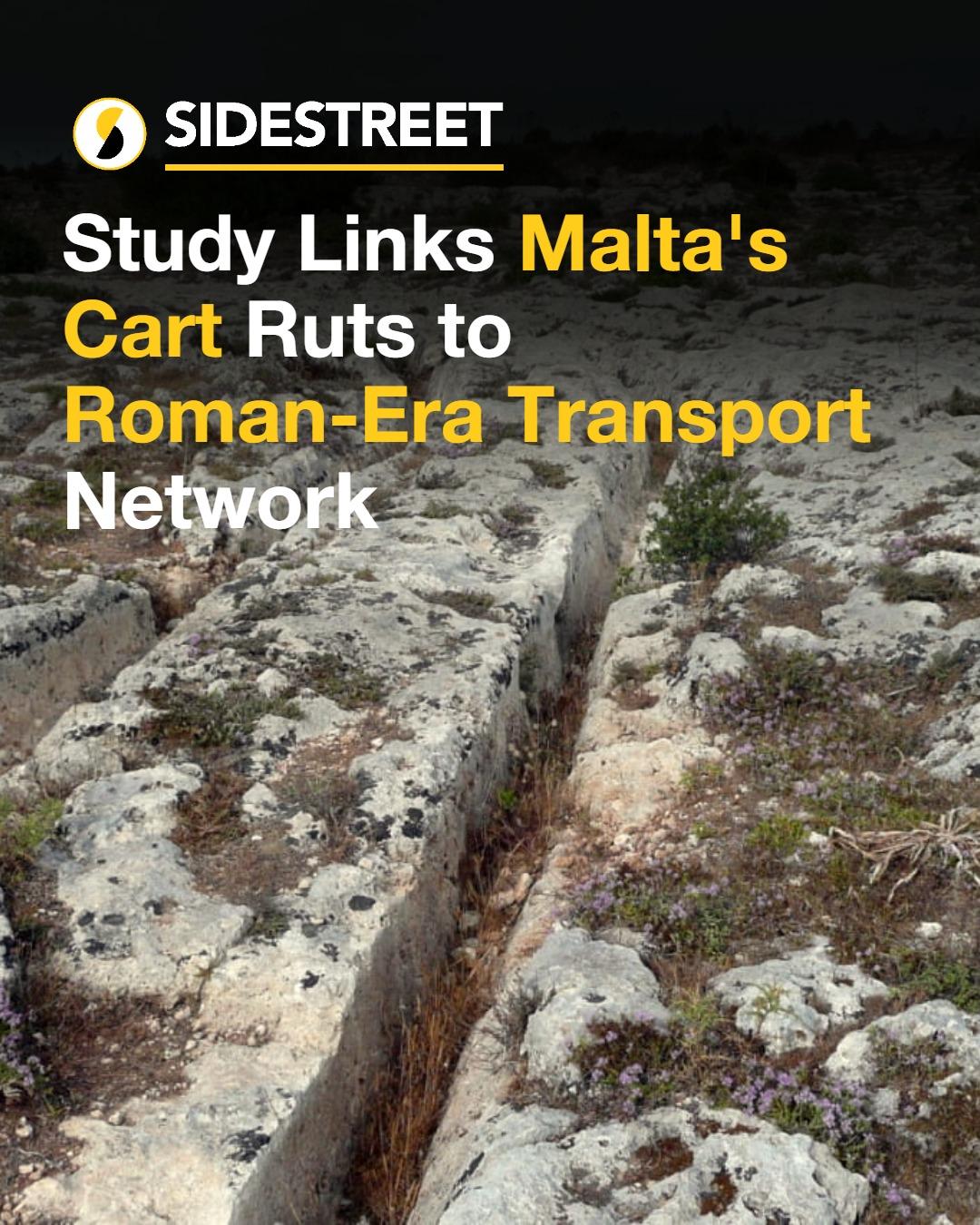
A new study has catalogued thousands of Malta's mysterious cart ruts and concluded they most likely date from the Classical period rather than prehistory, challenging decades of theories about their origin.

Malta's famous cart ruts, long theorised to be prehistoric in origin, may tell a very different story. A new study by Joel Grima of the University of Malta has catalogued 2,628 cart tracks across 228 sites in Malta and Gozo, concluding that the evidence points overwhelmingly to a Classical-period origin spanning the Phoenician, Punic, Roman and Byzantine eras, roughly between 750BC and AD870.
The research, published in the Journal of Archaeological Science: Reports, used drone photography, three-dimensional modelling and geographical information systems to build the most comprehensive survey of the tracks to date. Grima argues the ruts were not deliberately carved but worn gradually into Malta's soft limestone by wheeled vehicles, likely iron-tyred carts drawn by livestock, moving goods between quarries, farmsteads, urban centres and harbours.
Submerged cart ruts, previously used to argue for prehistoric origins, are also addressed directly in the study. Grima notes that local sea levels rose by 1.3 metres over the past two millennia, meaning those tracks would have been entirely on dry land during Roman times. The study also found that 34 per cent of ancient tombs surveyed were located within 50 metres of a cart track, consistent with the classical practice of situating cemeteries along busy roads.
While the research does not assign a precise date to every individual track, it firmly shifts the weight of evidence away from prehistoric and extraterrestrial theories alike.
Playing it here loads it from Instagram, which lets Meta see that you visited. Open it on Instagram instead and nothing loads here.